Checking out the Benefits and Techniques of Aluminum Casting in Modern Manufacturing
Aluminum casting has become a critical strategy in modern manufacturing. Its lightweight residential properties boost power effectiveness and minimize transport expenses. In addition, developments in casting methods enable complex layouts and quick prototyping. However, the benefits expand past mere efficiency. The sustainability of aluminum casting processes offers significant implications for numerous industries. Recognizing these facets can disclose the transformative impact of aluminum in contemporary manufacturing techniques. What additional developments could redefine its role?
The Lightweight Benefit of Aluminum Casting
Aluminum casting provides a substantial lightweight benefit that is transforming sectors reliant on resilient yet convenient products. This property is especially helpful in markets such as auto and aerospace, where every ounce counts in performance and gas performance. The reduced weight of aluminum elements enables for boosted handling, reduced transportation expenses, and boosted energy performance throughout operation. Unlike much heavier metals, aluminum gives a balance of toughness and agility, making it an ideal option for facility applications that require high performance without sacrificing structural honesty. Furthermore, the corrosion resistance of aluminum extends the life-span of actors elements, reducing the requirement for constant replacements. This combination of lightweight features and toughness settings aluminum casting as a crucial innovation in contemporary manufacturing processes, urging technology and supporting the growth of innovative items that fulfill the progressing needs of various markets.
Enhanced Style Versatility and Intricacy
Design flexibility and intricacy are significantly boosted through making use of aluminum casting, allowing suppliers to produce detailed forms and forms that were previously unattainable with conventional techniques. This ability makes it possible for the manufacturing of parts with in-depth geometries, such as complicated internal flows and thin-walled structures, which can notably boost the efficiency of the final item.
Aluminum casting techniques, such as die casting and sand casting, promote fast prototyping, enabling developers to iterate and fine-tune their ideas swiftly. The capacity to produce tailored molds additionally adds to far better positioning with specific style requirements, lowering material waste and decreasing the requirement for extensive machining.
In addition, the lightweight nature of aluminum enhances its design adaptability, as it enables for both aesthetic allure and useful performance. Generally, the developments in aluminum casting give producers with the devices to push the limits of design, promoting innovation throughout numerous markets.
Superior Thermal and Electric Conductivity
Aluminum's exceptional thermal and electric conductivity makes it a crucial product in various production applications. Contrasted to other steels, aluminum uses considerable advantages, particularly in warmth dissipation and electrical performance. Aluminum Castings. This property allows its widespread use in sectors ranging from auto to electronic devices, enhancing total performance and integrity
Thermal Conductivity Advantages
A crucial advantage of aluminum casting depends on its remarkable thermal and electrical conductivity, making it a perfect selection for numerous applications in contemporary manufacturing. The high thermal conductivity of aluminum enables efficient warmth dissipation, which is important in industries such as vehicle and electronic devices. Components crafted from aluminum can properly manage temperature level variations, prolonging the life expectancy of items and boosting performance. This characteristic additionally makes it possible for producers to produce light-weight layouts without compromising thermal efficiency. Furthermore, aluminum's capability to hold up against thermal biking further solidifies its setting sought after settings. As industries increasingly prioritize power performance and performance, the thermal conductivity benefits of aluminum casting come to be progressively considerable in driving technology and sustainability.
Electrical Conductivity Applications
The electric conductivity of aluminum enhances its thermal buildings, making it an important product in various applications within modern-day manufacturing. This conductivity allows effective energy transfer, which is essential in electrical elements such as circuitry, ports, and circuit card. Aluminum's lightweight nature additionally boosts its allure in applications where reducing weight is important, such as in aerospace and automobile markets. Furthermore, aluminum casting permits the development of complicated shapes, enhancing the performance of electrical devices. The material's resistance to deterioration and oxidation also adds to long life in electric atmospheres, making certain dependability. Generally, aluminum's exceptional electrical conductivity positions it as a favored selection in markets that demand high efficiency and effectiveness in their electric applications.
Comparison With Various Other Steels
While aluminum is renowned for its exceptional thermal and electrical conductivity, it is vital to compare its homes with those of various other steels to comprehend its advantages totally. Copper, as an example, shows even greater electrical conductivity, making it preferable in specific applications like circuitry. Copper's weight and expense can restrict its use. On the other hand, aluminum provides a desirable balance of conductivity, weight, and price, making it suitable for many production applications. Additionally, aluminum's thermal conductivity is normally above that of stainless-steel and titanium, which are frequently utilized in high-temperature environments. Eventually, aluminum attracts attention not only for its conductivity however also for its lightweight and corrosion-resistant residential or commercial properties, making it a functional choice in modern-day production.
Cost-Effectiveness and Decreased Material Waste
Maximizing cost-effectiveness and reducing product waste are vital benefits of aluminum casting in modern-day manufacturing. Aluminum's light-weight nature adds to lower shipping expenses and power intake during production. Furthermore, its superb recyclability means that scrap material produced during the casting procedure can be recycled, significantly minimizing the total product costs.
In addition, aluminum casting techniques frequently permit complicated forms to be created with less additional procedures, which enhances the production procedure and lowers labor expenditures. The ability to develop specific parts lowers the demand for extreme machining, additional lessening waste.
Business embracing aluminum casting take advantage of decreased production time and increased efficiency, bring about total price savings. This combination of reduced product prices, reliable reusing approaches, and effective production procedures placements aluminum casting as a monetarily helpful option in the competitive landscape of modern manufacturing.
Developments in Aluminum Casting Techniques
Current innovations in aluminum casting techniques are transforming the production landscape. Innovations such as the integration of additive manufacturing, boosted mold layouts, and green casting procedures are driving efficiency and sustainability. These growths not only improve item quality but additionally decrease ecological effect in the aluminum casting sector.
Additive Manufacturing Integration
Additive manufacturing is revolutionizing aluminum casting strategies by allowing the production of complicated geometries and lightweight structures that were formerly unattainable. This integration permits producers to utilize 3D printing innovations to develop intricate mold and mildews and cores, which facilitate the casting of comprehensive layouts with enhanced accuracy. In addition, additive manufacturing minimizes product waste and shortens preparations, making it an extra sustainable and reliable approach. Therefore, companies can respond a lot more rapidly to market demands and personalize items to meet details customer demands. This harmony between additive production and aluminum casting not just enhances style versatility but likewise placements suppliers to innovate continuously, driving improvements in performance and item performance within the competitive landscape of modern manufacturing.

Enhanced Mold And Mildew Design
As manufacturers seek to improve effectiveness and product high quality, advancements in mold style have become an essential factor in modern aluminum casting techniques. Advanced mold materials, such as silicon carbide and graphite, enhance thermal conductivity and resilience, permitting faster cooling and improved surface finishes. The combination of computer-aided style (CAD) innovation allows exact great post to read mold geometries, assisting in complicated shapes that were previously challenging to achieve. Technologies like 3D-printed mold and mildews likewise offer rapid prototyping capabilities, lowering preparations significantly. In addition, modular mold and mildew styles enable easier changes and repair services, reducing downtime during production. Jointly, these enhancements not only simplify producing processes yet likewise contribute to the general quality of aluminum actors items, satisfying the evolving needs of various sectors.
Eco-Friendly Casting Processes
While the aluminum casting market remains to develop, an expanding emphasis on sustainability has actually resulted in the growth of environment-friendly casting processes. These cutting-edge techniques intend to reduce ecological impact by lessening waste and energy usage. One notable technique involves making use of recycled aluminum, which significantly decreases the carbon footprint connected with basic material extraction. In addition, developments in mold and mildew products and designs permit for much Source more effective warmth transfer, decreasing power needs during manufacturing. Water-based coatings and binders replace standard solvents, in addition decreasing dangerous exhausts. Some manufacturers are adopting closed-loop systems, guaranteeing that waste products are recycled within the manufacturing cycle. Jointly, these eco-friendly casting processes not only improve sustainability yet also add to an extra responsible manufacturing landscape.
Sustainability in Aluminum Casting Processes
Sustainability in aluminum casting procedures has actually become a prime focus for makers intending to decrease their ecological impact. The market is increasingly taking on methods that lessen waste and enhance resource efficiency. One considerable method entails the usage of recycled aluminum, which calls for only a fraction of the power needed to create brand-new steel from ore. This not just preserves sources however likewise decreases greenhouse gas discharges related to production.
Advancements in modern technology have actually led to more energy-efficient casting methods, such as low-pressure and gravity casting, which maximize product use and reduce power usage. Aluminum Castings. Makers are likewise executing closed-loop systems that allow for the recycling of scrap product produced during the casting procedure. Furthermore, the use of eco-friendly coatings and lubricants better adds to a more lasting operation. Overall, these campaigns show a commitment to ecological stewardship while preserving the quality and efficiency of aluminum casting
Applications of Aluminum Casting Throughout Industries
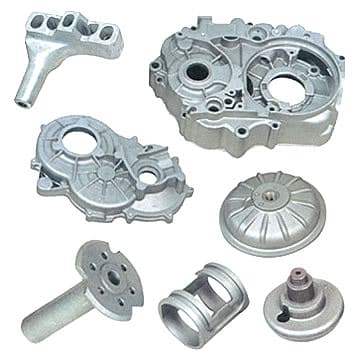
Aluminum casting finds considerable applications across numerous markets due to its light-weight, strength, and convenience. In the vehicle sector, aluminum spreadings are utilized to generate engine blocks, transmission housings, and wheels, boosting fuel effectiveness while reducing discharges. The aerospace industry uses aluminum castings for structural parts, gaining from their high strength-to-weight proportion, which is crucial for flight safety and performance.
In the customer electronics industry, aluminum castings are utilized for real estate and structural components, supplying resilience and visual allure. Additionally, the building and construction sector leverages aluminum castings for architectural aspects and components, taking advantage of their resistance to rust.
The marine industry integrates aluminum castings in boat frameworks and engine components, mirroring its viability for harsh environments. In general, the varied applications of aluminum casting emphasize its importance in contemporary production, adding to technology and efficiency across various fields.
Often Asked Concerns
What Are the Typical Alloys Utilized in Aluminum Casting?
The typical alloys utilized in aluminum casting consist of 413, 356, and A380. These alloys are valued for their exceptional fluidness, strength, and corrosion resistance, making them appropriate for different applications in manufacturing and engineering.
Exactly How Does Aluminum Casting Compare to Various Other Casting Techniques?
Aluminum casting offers special advantages over other casting techniques, such as lighter weight, exceptional rust resistance, and premium thermal conductivity. It also enables elaborate styles and faster manufacturing times contrasted to typical products like iron or steel.
What Is the Normal Life-span of Aluminum Cast Products?
The typical life expectancy of aluminum actors products varies, generally varying from 20 to 50 years, depending on variables such as ecological conditions, upkeep, and certain applications. Proper treatment can significantly extend their durability and efficiency.
Are There Any Kind Of Health And Wellness Risks Connected With Aluminum Casting?
The concern of health threats connected with aluminum casting occurs due to possible direct exposure to aluminum dust and fumes. Long term her explanation inhalation might lead to respiratory system problems, stressing the significance of appropriate precaution throughout the casting procedure.
Exactly How Can Issues Be Reduced in Aluminum Casting?
To minimize problems in aluminum casting, manufacturers can carry out stringent quality assurance measures, enhance mold and mildew designs, preserve proper temperature control, make use of appropriate alloy structures, and use efficient cleansing techniques to ensure a defect-free casting procedure.
Comments on “A complete guide to Aluminum Castings techniques and processes”